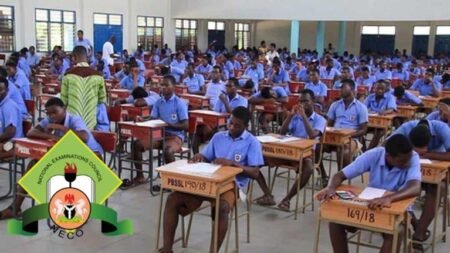






The Federal Government has suspended the proposed hike in WAEC and NECO examination fees for 2027, following strong public backlash. Many parents and students across Nigeria can now breathe easier as the Ministry of Education withdraws its earlier approval for a uniform N50,000 registration fee per candidate.
The move comes just a day after news of the sharp increase broke and triggered widespread criticism. In a statement released on July 13, 2026, the ministry said it is withdrawing the June 18 circular that had approved the new rate. The suspension will allow for wider consultations with stakeholders before any final decision.
Back in June, the Federal Ministry of Education approved an 82 percent jump in fees for the Senior Secondary Certificate Examinations. WAEC candidates were to move from N27,500 to N50,000, while NECO internal candidates would rise from N30,000 to the same amount. The ministry said the review followed a request from WAEC and aimed to create a uniform fee structure for both bodies.
Officials pointed to rising costs of logistics, security, printing of materials, technology and quality assurance as reasons for the upward review. The new fee was meant to take effect from the 2027 examination cycle.
The government has now hit the pause button. In the fresh statement signed by the Director of Press and Public Relations, Boriowo Folasade, the ministry said the Honourable Minister of Education, Dr Tunji Alausa, directed the withdrawal of the earlier letter. The step was taken to enable comprehensive review and broader engagement with stakeholders.
The ministry stressed that students’ welfare and equitable access to quality education remain top priorities. The proposed fee review will not take effect until consultations are concluded and a final position is reached.
Former Vice President Atiku Abubakar was among the first to strongly condemn the proposed increase. He described it as unconscionable at a time when families are already battling inflation, high food prices, transport costs and unemployment. Atiku warned that the hike would deny millions of children access to education and widen inequality in a country already grappling with millions of out-of-school children.
Student groups, including the National Association of Nigerian Students (NANS), also kicked against the move, arguing it would push more young people out of school and worsen existing challenges in the education sector. Many parents had expressed fears that the N50,000 fee would be unaffordable for average households.
The ministry has pledged to consult widely with examination bodies, state ministries of education, school proprietors, parents’ associations, organised labour and other education stakeholders. Officials say they will keep the public informed throughout the process.
For now, the current fee structure remains in place. Parents and school administrators who had begun planning around the proposed N50,000 rate can hold off on major adjustments while the government listens to more voices.
This quick reversal shows the Federal Government is paying attention to public concerns on education costs. Whether the final decision will favour affordability or cost recovery remains to be seen after the consultations.