

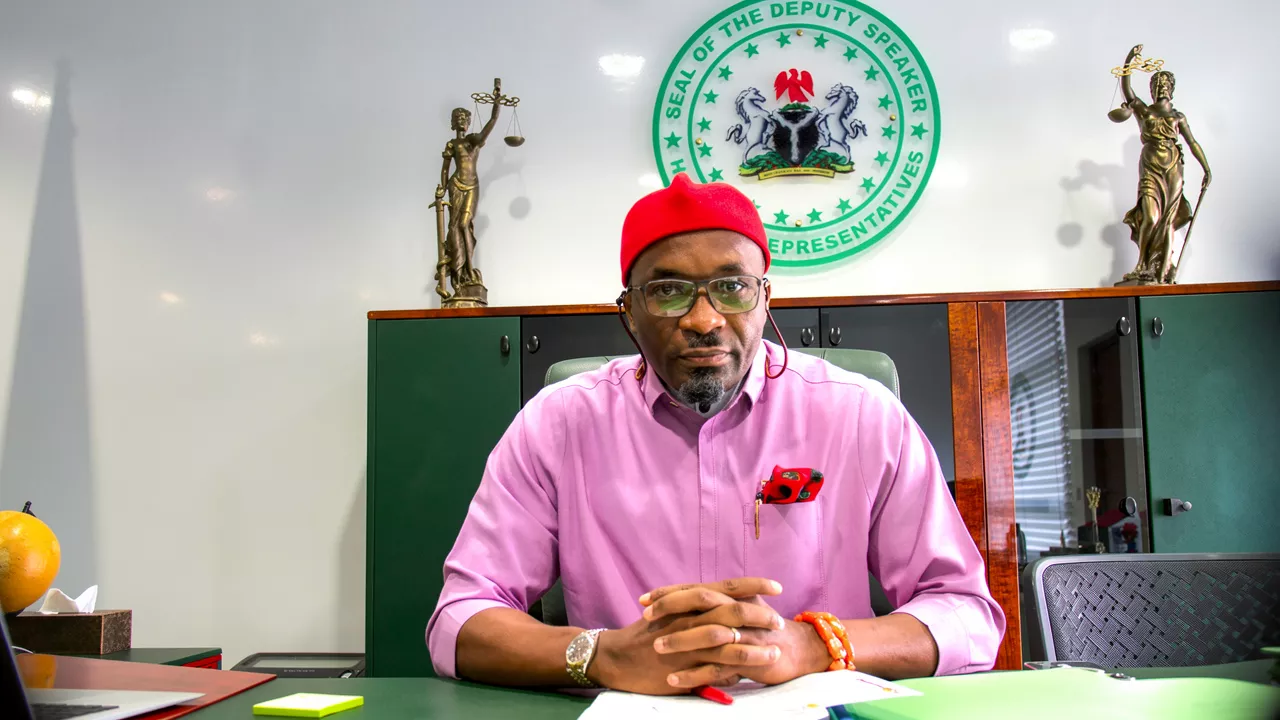
The Office of the Deputy Speaker of the House of Representatives, Rt. Hon. Benjamin Okezie Kalu, has clarified reports that N1 billion was inserted in the 2026 budget solely for the procurement of musical instruments for churches in Bende Federal Constituency, Abia State.
In a press statement issued on Wednesday, the office described the reports as a misrepresentation of the actual provision.
According to the statement, the actual allocation is N780 million (after VAT and other tax deductions). The funds are earmarked for Youth Re-orientation and Social Support Programmes to be delivered through faith-based organisations (churches) in Bende Federal Constituency.
The programme is designed to equip churches to expand existing youth engagement platforms focused on character reform, discipline, values, peace, and community outreach. It specifically targets campaigns against vices such as the spread of narcotics, sexual offences, and violent crimes.
The first phase of the support is expected to cover 130 churches across the 13 federal wards in Bende, with each church receiving between N5 million and N6 million.
The Deputy Speaker’s office explained that the intervention goes beyond the purchase of musical instruments and public address systems. It is aimed at leveraging faith-based institutions to reorient youths and promote moral values in the constituency.
The statement noted that nation-building should not be limited to physical infrastructure but should also include efforts to build the character and value system of citizens.
It added that while traditional institutions are already being supported with town halls and community centres for value formation, faith-based organisations also have a critical role to play in sustaining good norms in society.
The office admitted that there was a technical error in the procurement description in the budget. It stated that a letter of corrigendum has been initiated through the Budget Office and the Appropriation Committee for the necessary correction before implementation.
It further clarified that the 2026 budget is yet to be funded and implemented, as the country is still operating on the 2024 and 2025 budgets.
The clarification has continued to generate mixed reactions on social media, with some Nigerians questioning the use of public funds to support religious institutions, while others argued that investing in moral reorientation through trusted community structures is a legitimate approach to addressing social vices.