




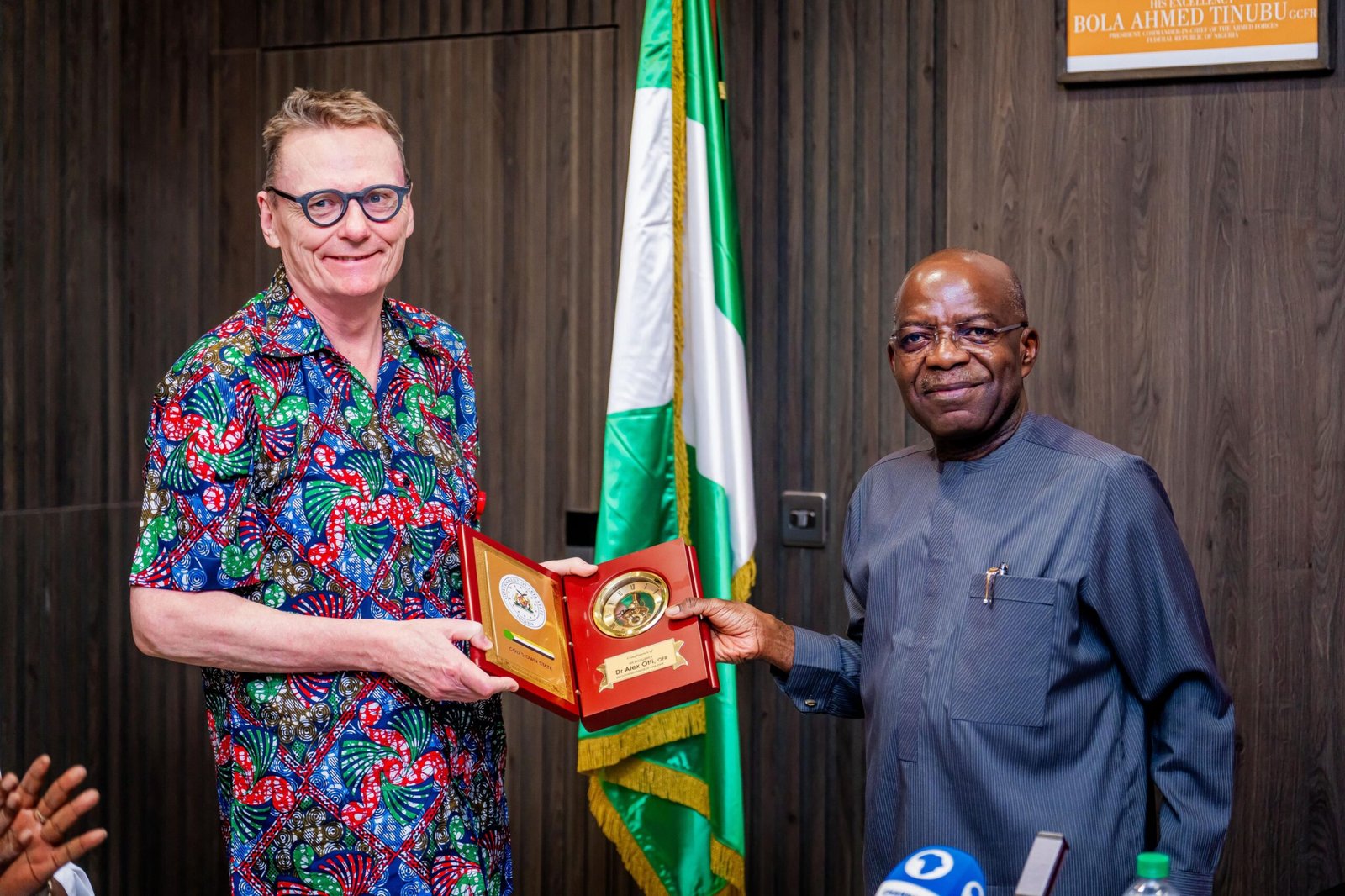
The Abia development model attracted historic international academic validation on Monday evening. Governor Alex Otti received the 2024 Nobel Laureate in Economics, Prof. James A. Robinson, alongside a delegation of distinguished scholars at Nvosi. This crucial strategic meeting focused primarily on institutional frameworks required to break regional cycles of generational poverty.
The visiting academic delegation deeply appreciated the structural reforms currently taking place across the commercial territory. Leader of the delegation and former Minister of Education and Health, Prof. Ihechukwu Madubuike, praised the administration’s fiscal discipline and absolute transparency.
He noted that the state’s emphasis on productivity closely mirrors the core development principles that the global academic community champions. “Many of us, including those living in the Diaspora, are really proud of you and what is happening in Abia,” a member of the delegation, Prof. Chiegeonu Korie, told our correspondent. Consequently, the scholars encouraged the government to sustain its present momentum to inspire neighboring states.
Governor Otti, a first-class economics graduate from the University of Port Harcourt, argued that mere growth statistics often fail to reflect actual societal progress. He emphasized that a 3% or 5% GDP growth becomes completely meaningless if population growth simultaneously explodes by 10% within the same timeframe. Therefore, the administration remains committed to implementing empirical policies that drive sustainable progress rather than chasing empty figures.
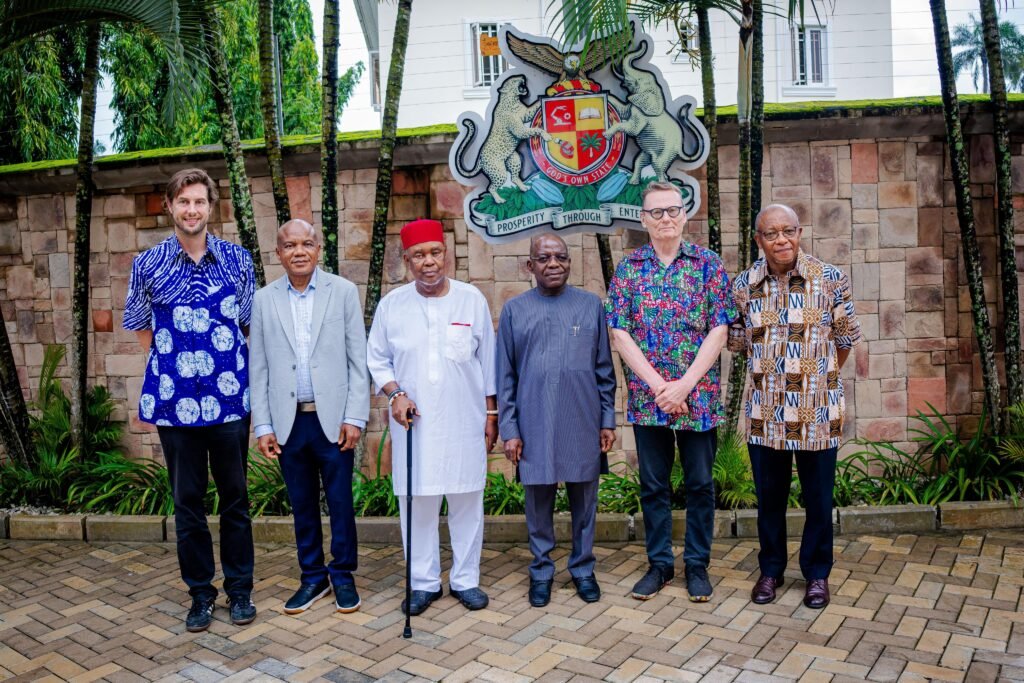
The state government formally expressed its readiness to collaborate directly with the University of Chicago professor on deep institutional research and knowledge exchange. This strategic partnership will officially launch next month to strengthen local administrative capacity across all ministries.
- Formal establishment of a joint policy advisory framework to review ongoing civil service and fiscal reforms.
- Collaborative research initiatives targeting the eradication of rural poverty through enhanced agricultural inputs.
- Deployment of global knowledge exchange programmes for top-tier administrators within the regional ministries.
- Integration of institutional economic models into the curriculum of the newly created leadership academy.
The President of the Abia State Leadership Academy, Prof. Kenneth Kalu, explained that the institution will spearhead the local implementation of these economic frameworks. He added that the academy, which emerged from a recent Executive Order, aims to produce empathetic and institution-focused leaders who understand civic responsibilities.
Furthermore, regional economic planners believe that fixing fundamental institutional defects will automatically trigger massive private investments. Local business owners expressed great optimism that this international synergy will quickly revitalize commercial activities in cities like Aba and Umuahia.
“For us here, we start from that point: what is it that we need to do to break the cycle of poverty?”
State officials are already drafting a formal memorandum of understanding to seal this partnership before the current quarter ends. Meanwhile, the ministry plans to host an expanded economic summit to sensitize local stakeholders on the new policy directions. This collaborative effort will permanently shift the state’s governance style away from wasteful political patronage toward measurable economic outputs. How will other southeastern states adapt their fiscal models if this collaborative experiment successfully transforms Abia into Africa’s next major economic miracle?