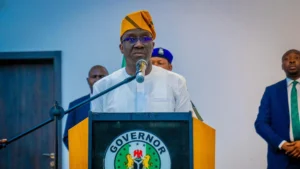




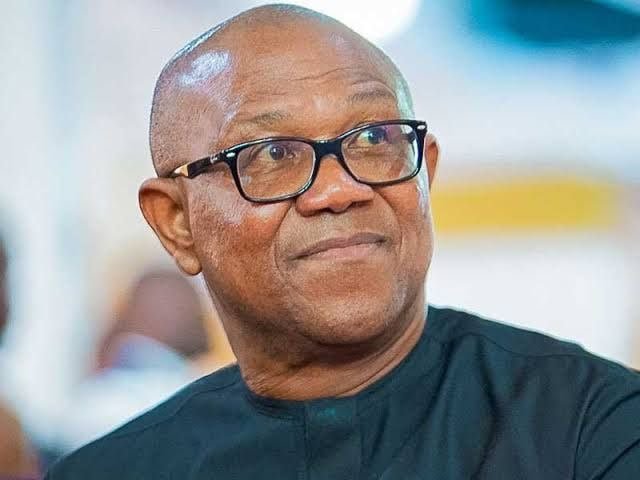
Peter Obi slams President Bola Tinubu over divisive campaign strategies. The NDC presidential candidate accused the administration of relying on tribal and religious sentiments during a political engagement in Abuja on Monday, August 3, 2026. Obi insisted that politicians who play ethnic cards only cover up their sheer incompetence and total lack of substance for national development.
The former Anambra governor addressed a crowded gathering of civic leaders, trade unionists, and youth advocates in the nation’s capital. He noted that political elites habitually exploit regional and religious divisions whenever they lack concrete economic plans to rescue the country from soaring inflation and unemployment.
Obi emphasized that Nigerian voters must firmly reject political candidates who manipulate ethnic fault lines to capture power without delivering tangible developmental progress. Mr. Peter Obi said effective national leadership demands proven administrative competence rather than destructive political rhetoric.
“The reason Tinubu uses tribal and religious sentiments as campaign strategy is because he’s incompetent and has nothing to offer Nigerians,” Obi stated forcefully during the interactive session.
Official economic data from the National Bureau of Statistics shows that food inflation hit a staggering 40.8 percent earlier this year, placing severe financial pressure on millions of struggling households. Opposition figures continue to criticize federal economic policies, noting that fuel price hikes and currency devaluation have deepened poverty across all thirty-six states.
Political commentators observe that the Labour Party candidate built his massive political movement during the 2023 general elections by appealing directly to economic realities rather than ethnic loyalty. During that historic contest, Obi officially secured over 6.1 million votes and won eleven states alongside the Federal Capital Territory.
Furthermore, regional socio-cultural groups across the country are urging citizens to prioritize administrative track records over partisan affiliations ahead of future electoral cycles.
- Complete rejection of ethnic and religious profiling in candidate selection for all public offices across the federation.
- Mandatory shift toward policy-driven debates centered on economic growth, national security, and power sector reform.
- Mobilization of young voters to demand strict accountability and fiscal discipline from elected public officials.
- Institutional protection for electoral processes to eliminate voter suppression and political intimidation in rural communities.
“No tribe buys bread cheaper and no religion buys rice at a discount; every Nigerian suffers the same harsh economic realities today.”
The presidency has not yet issued an official statement in response to the opposition leader’s latest scathing critique. Meanwhile, various opposition political coalitions are finalizing strategic plans to host major consultative summits across Enugu, Lagos, and Kaduna over the coming months.
Party chieftains across the political spectrum must now decide whether to engage in constructive policy debates or persist with entrenched identity politics. Will the Nigerian electorate finally break away from divisive campaign strategies and enforce strict competence benchmarks during the next political cycle?