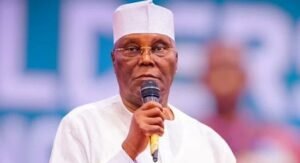
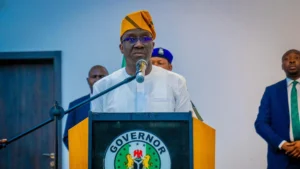




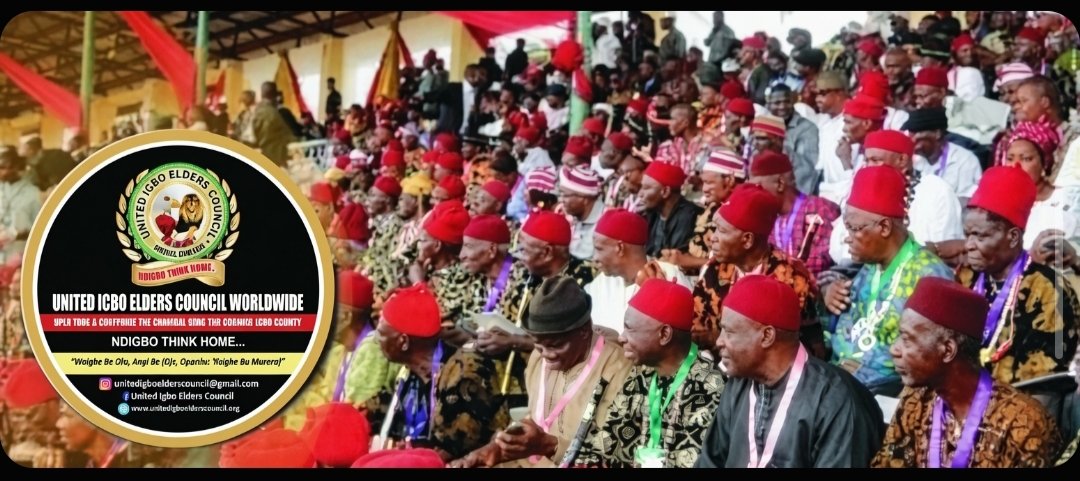
The United Igbo Elders Council forcefully rejected comments by Works Minister Senator David Umahi regarding Peter Obi during an emergency session in Enugu this Tuesday.
Igbo leaders declared that no public official holds authority to determine the political choices of Ndigbo. Consequently, the elder statesmen cautioned federal ministers against making public statements that threaten democratic freedom across the South-East region.
The influential socio-cultural organisation issued a comprehensive communiqué following a strategic summit convened to evaluate rising political friction in the zone.
Elder statesmen expressed deep concern over high-ranking political actors who repeatedly attempt to dictate voting directions to southeastern citizens ahead of upcoming national contests. Dr. Alphonsus Uche, a senior coordinator within the council, told our correspondent that the region’s electorate retains absolute sovereignty over its democratic choices. “Ndigbo will decide their political future at the ballot box without taking dictation from any serving minister or political appointee,” Uche stated during the media briefing.
He further emphasized that public officials must focus on delivering good governance rather than attempting to control regional electoral dynamics.
This sharp rebuke follows recent public statements in which the Works Minister openly criticized the presidential ambition of the opposition leader.
Umahi had previously challenged political opponents to public debates concerning federal road infrastructure projects executed across the five southeastern states. Official ministry records indicate that the Federal Government currently oversees more than 45 major road rehabilitation projects across the zone, including key sections of the Enugu-Port Harcourt expressway. Nevertheless, elder statesmen maintain that infrastructure delivery should never serve as a bargaining chip to coerce voters or suppress opposition figures.
- Unanimous rejection of external political interference regarding southeastern voting decisions and candidate preferences.
- Direct demand for federal ministers to prioritize completed road projects over divisive political commentary.
- Reaffirmation of regional democratic autonomy for Ndigbo across all political party platforms.
- Plan to establish a non-partisan advisory committee to safeguard voters from political intimidation.
“No individual, irrespective of political status or public office, has the authority to determine the political choices of Ndigbo.”
Looking ahead, political commentators expect debate over political independence in the South-East to intensify as national political alignment discussions gain momentum. Meanwhile, grassroots coalitions across Enugu, Awka, and Owerri are mobilizing town hall sessions to foster civic awareness and protect voting rights. The council confirmed plans to host an all-inclusive leadership summit in late August to establish a unified socio-political roadmap for Ndigbo. Will political officeholders heed the council’s stern warning and respect regional self-determination, or will partisan clashes continue to divide the South-East political landscape?