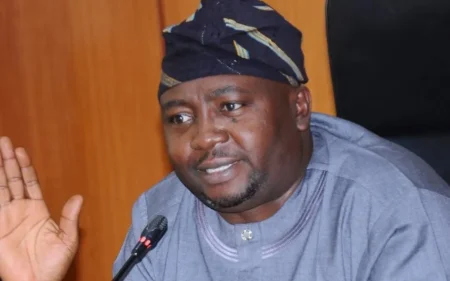




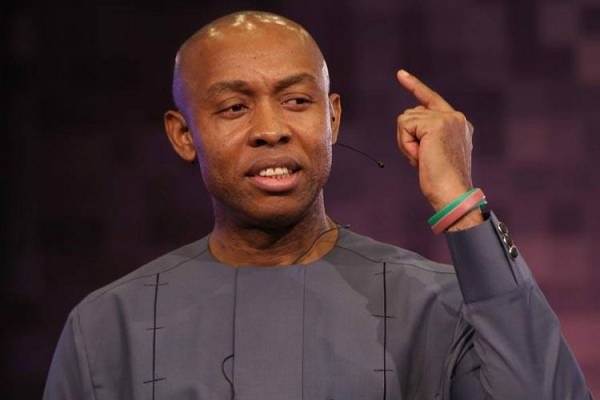
Chidi Odinkalu slams President Bola Tinubu over the lack of publicly available records regarding his early education, genealogy, and nationality.The human rights activist and former Chairman of the National Human Rights Commission (NHRC) raised these concerns during a radio broadcast on Nigeria Info FM on Friday, August 7, 2026.
Why did Chidi Odinkalu question President Tinubu’s background?
Speaking during the interactive broadcast, the prominent legal scholar questioned how a sitting president could lack verifiable primary and secondary school certifications before proceeding to tertiary education.Odinkalu addressed earlier assertions by government defenders—such as Minister Festus Keyamo—who suggested the President may have been homeschooled in his early years, arguing that homeschooling still requires standardized certification before university admission.Furthermore, he pointed out discrepancies in previous electoral filings where institutions such as Government College Ibadan were initially claimed but later disputed.“We have a president whose nationality we do not know because he carries a Guinean diplomatic passport, whose genealogy we do not know, and whose primary school and secondary school we do not know,” Odinkalu stated.

The activist emphasized that attending any early educational institution—no matter how modest—should be a point of personal pride for a public official rather than a source of mystery.Reflecting on his own upbringing as an internally displaced child following the Nigerian Civil War, Odinkalu stressed that transparent public records build democratic trust and civic integrity. The presidency and government spokespersons have consistently maintained that President Tinubu met all constitutional requirements to hold public office, emphasizing his verified degree from Chicago State University and decades of public leadership in Nigeria.
- Questioning of President Tinubu’s primary and secondary school records, genealogy, and foreign diplomatic passport claims.
- Rejection of arguments suggesting early homeschooling without formal preparatory certifications.
- Highlighting of historical inconsistencies in past electoral qualification filings submitted to election authorities.
- Strong call for increased transparency regarding public officials’ educational and biographical backgrounds.
“We have a president whose nationality we do not know because he carries a Guinean diplomatic passport. Whose genealogy we do not know, and we now understand President Buhari thought the same thing too. Whose primary school we do not know, whose secondary school we do not know, who now claims he went to university…”
Political analysts note that public debates surrounding the biographical transparency of political leaders remain a recurring feature of Nigerian civic discourse. Meanwhile, civil society organizations continue to call for electoral reforms that streamline candidate verification protocols to eliminate lingering pre-election controversies. As public discussions continue across media platforms, observers are monitoring how official representatives respond to demands for greater transparency. Will the federal government address these renewed calls for biographical clarity as civic groups push for deeper public accountability?