





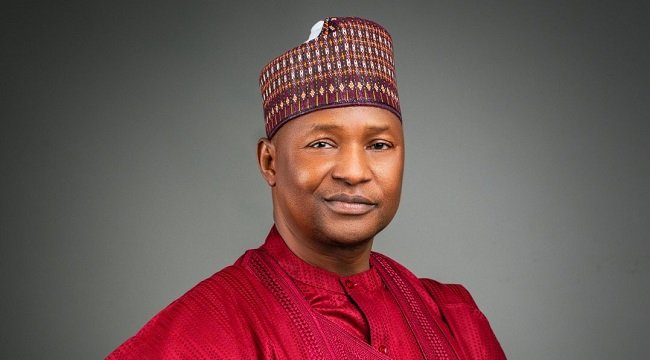
The Federal High Court in Abuja has ordered the final forfeiture of 48 properties worth over N212 billion linked to former Attorney-General of the Federation and Minister of Justice, Abubakar Malami, SAN.
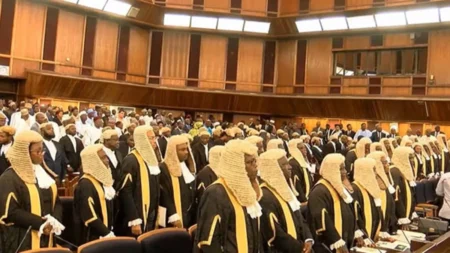
Justice Joyce Abdulmalik delivered the ruling on Wednesday, July 15, 2026, after granting an application filed by the Economic and Financial Crimes Commission (EFCC). The court dismissed all objections raised by Malami, members of his family, and companies linked to him.
In her judgment, Justice Abdulmalik held that the central issue before the court was not who owned the properties, but whether the funds used to acquire them were legitimately sourced. The court ruled that the EFCC successfully proved that the assets were acquired with proceeds of unlawful activities.
The judge dismissed several applications filed by Malami and parties claiming ownership of the properties, describing the objections as lacking merit. The ruling effectively transfers ownership of the assets to the Federal Government.
The properties, which were earlier placed under interim forfeiture by the EFCC, are spread across Abuja, Kebbi, Kano, and Kaduna states.
The forfeited assets include several high-value hotels, educational institutions, factories, residential properties, and commercial buildings. Notable among them are:
- Rayhaan University in Kebbi State, comprising the permanent site, temporary site, and third site, valued at over N96 billion.
- Several luxury hotels including Meethaq Hotels in Maitama and Jabi, Zeennoor Hotel in Kano, Azbir Hotel in Kebbi, and Rayhaan Hotel in Kano.
- A large agro-allied factory complex in Kebbi State with machines and plants valued at over N14 billion.
- Multiple luxury duplexes and residential properties in Maitama, Asokoro, Gwarimpa, and other highbrow areas of Abuja.
- Commercial properties including plazas, warehouses, shops, and filling stations across Abuja, Kano, and Kebbi.
- Educational institutions such as Rayhaan Model Academy and Rayhaan Primary and Secondary School in Kebbi.
In total, 48 out of the 57 properties listed in the EFCC’s application were ordered forfeited, while nine were excluded from the final order.
The EFCC had alleged that Abubakar Malami used his position as Attorney-General to acquire the properties through questionable means. The commission claimed that the assets were far beyond what could be reasonably acquired from his legitimate earnings as a public officer and legal practitioner.
During the proceedings, the EFCC presented evidence showing the properties were acquired between 2016 and 2024, a period that largely coincided with Malami’s tenure as Attorney-General.
The ruling marks one of the biggest asset recovery victories for the EFCC in recent times. It is expected that the forfeited properties will be managed by the Federal Government through relevant agencies.
Legal analysts say the judgment reinforces the principle that public officers must be able to explain the source of funds used to acquire assets, especially those of significant value.
Abubakar Malami has not issued any public statement on the court’s decision as of the time of filing this report.