





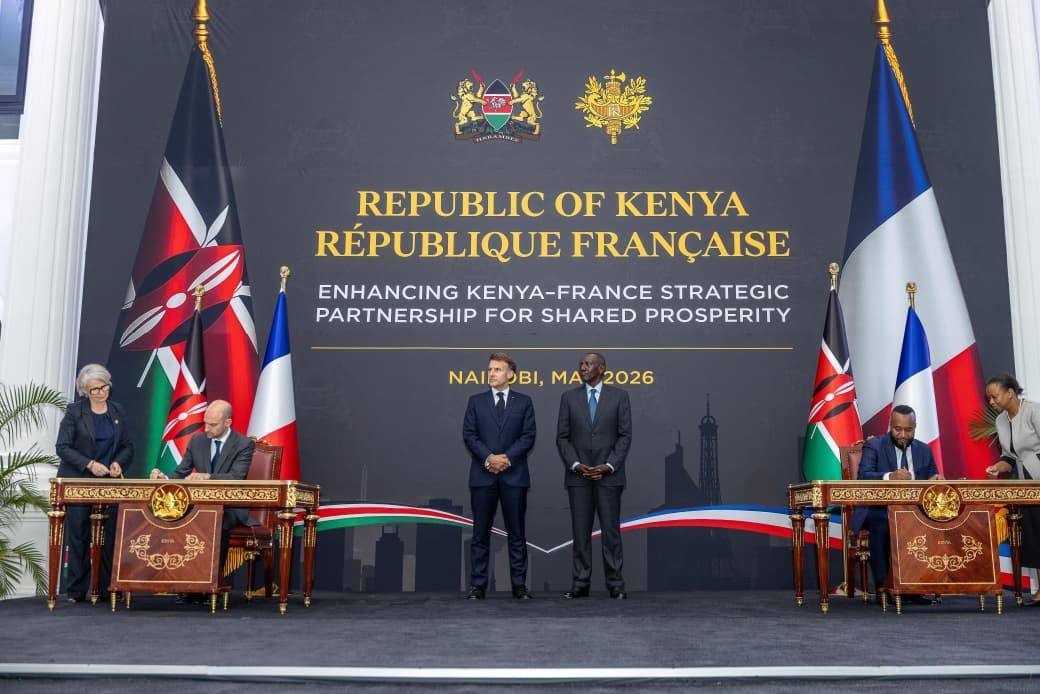
NAIROBI — French President Emmanuel Macron has concluded a high-profile two-day visit to Kenya, marked by the signing of 11 bilateral agreements, the launch of the Africa Forward Summit, and emerging domestic controversy over a new defence cooperation pact between Nairobi and Paris.
The visit, which began on Sunday, May 10, positions Kenya as France’s strategic gateway to East Africa and signals a recalibration of European engagement with the continent amid shifting geopolitical alliances.
Summit Highlights: Investment, Youth, and Strategic Partnership
Co-hosted by President William Ruto and President Macron, the Africa Forward Summit brought together approximately 30 heads of state, business leaders, and representatives from multilateral development banks. The agenda focused on:
- Economic partnerships: Promotion of French investment in Kenya’s green energy, digital infrastructure, and agribusiness sectors
- Youth empowerment: Launch of skills development programmes targeting 50,000 young Africans over the next five years
- Climate action: Commitments to scale up financing for renewable energy projects across East Africa
- Security cooperation: Framework for intelligence sharing and counter-terrorism collaboration
President Macron described the summit as “a new chapter in Africa-France relations—one built on reciprocity, co-creation, and respect for African agency.”
The Defence Pact: Cooperation or Controversy?
Central to the visit was the formalisation of a five-year renewable Defence Cooperation Agreement between Kenya and France, initially announced in April 2026. The pact grants Kenya access to French military training, maritime security technology, intelligence-sharing mechanisms, and joint counter-terrorism operations.
However, the agreement has ignited domestic debate in Kenya. According to a widely circulated post on X by @AfricaFactsZone, an opposition party has filed a petition challenging the constitutionality of the defence pact and called on Parliament and the Presidency to cancel the agreement. The petitioners reportedly plan to organise a public rally on May 12 to voice their objections.
Social media reactions to the development have been mixed. While some users expressed scepticism about France’s intentions in Africa, others defended President Ruto’s foreign policy approach, arguing that strategic international partnerships are essential for Kenya’s development and regional leadership.
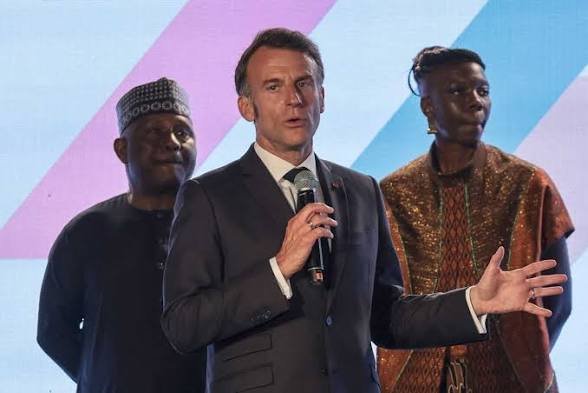
Another controversy was the moment President Macron, who was initially seated off-stage, stepped in during a panel discussion on culture and entrepreneurship after repeated noise from attendees disrupted the session.
“There is a total lack of respect,” he told the audience, urging those engaged in side discussions to either remain silent or continue their conversations outside. This has drawn widespread reason across the continent, as some sees it as a sign of disrespect, while others said he is in the right.
Nigeria’s Perspective: Watching Closely
As Africa’s most populous nation and a key player in West African diplomacy, Nigeria is monitoring the Kenya-France rapprochement with keen interest. Analysts in Abuja note that the deepening ties between Nairobi and Paris could influence regional dynamics, particularly within the African Union and the East African Community.
“Kenya’s positioning as a non-Francophone host of the Africa-France Summit is historically significant,” observed Dr. Amina Bello, a foreign policy expert at the Nigerian Institute of International Affairs. “It signals that France is seeking to broaden its engagement beyond its traditional sphere of influence. Nigeria must ensure that our own strategic partnerships remain robust and mutually beneficial.”
Nigeria and France maintain active diplomatic and economic relations, with French companies operating in Nigeria’s energy, infrastructure, and education sectors. However, Abuja has consistently emphasised that all international partnerships must align with African priorities and respect national sovereignty.
What the Agreements Mean for East Africa
The 11 agreements signed during Macron’s visit cover diverse areas, including:
🔹 Aviation: Expansion of air connectivity between French and Kenyan cities
🔹 Health: Collaboration on pharmaceutical manufacturing and disease surveillance
🔹 Education: Scholarships and research partnerships for Kenyan students in French institutions
🔹 Technology: Support for Kenya’s digital economy and start-up ecosystem
🔹 Maritime Security: Joint patrols and capacity-building for the Indian Ocean region
Critics, however, caution that implementation will be the true test. Past France-Africa initiatives have sometimes faltered due to bureaucratic delays, mismatched expectations, or domestic political shifts.
Regional Reactions and the Road Ahead
The summit has drawn both praise and scrutiny from across the continent. While some African leaders welcomed France’s renewed engagement, others echoed concerns raised in the Kenyan opposition petition about the need for transparency and parliamentary oversight in security agreements.
As Macron departs Nairobi for the next leg of his East African tour—which includes security talks in Ethiopia—the focus now shifts to implementation. Key questions remain:
- How will the defence pact be operationalised without compromising Kenya’s sovereignty?
- Will the economic commitments translate into tangible jobs and infrastructure for ordinary citizens?
- Can the Africa Forward model foster genuine partnership, or will it replicate old patterns of asymmetrical engagement?