




Meeting Lagos, a memoir of an innocent Gen Z.
Episode 1: The Arrival;
The bus from Enugu dropped you at Ojuelegba at 4:47 a.m. You remember the time because your phone died exactly then, and the last thing you saw before the screen went black was your mother’s text: “Call me when you settle.”
You didn’t settle. Not that morning.
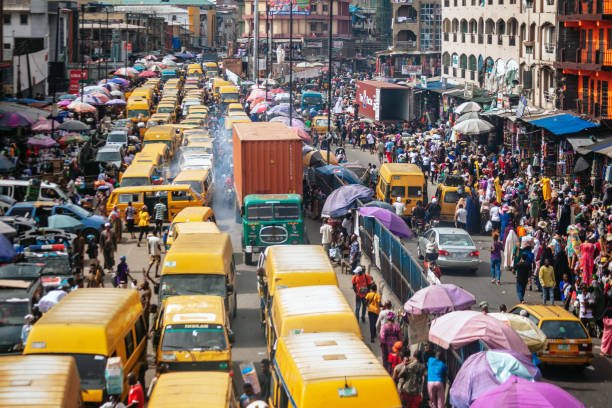
Lagos hit you with the smell of diesel and frying Akara before your legs even found the ground. You had one Ghana-Must-Go bag, a B.Sc. certificate wrapped in nylon inside your backpack, and ₦34,400 in your pocket — your entire survival fund. Your uncle who promised you “connections in Ikeja” stopped picking your calls three days before you left school. You didn’t tell your mother that part.
By 6 a.m., you were walking under the bridge at Jibowu, watching men sleep on newspaper beds between the pillars. You thought, So this is what nobody tells you in Career Week. In school, they talked about CV formatting and “dressing for success.” Nobody mentioned that success in Lagos might mean finding a spot where the rain doesn’t reach.
You found a face-me-I-face-you in Yaba. ₦300,000 a year, payable in two installments. You paid half, watched your money halve-the one that your Uncle sent, the one that didn’t touch your Opay account, and moved into a room where the window faced another window three feet away. Your neighbor, a guy named Chiboy who sold phone accessories at Computer Village, helped you carry your bag up the stairs. He looked at your certificate when it slipped out.
“You don dey find work?” he asked.
You nodded like it was a simple question.
Chiboy laughed. Not a mean laugh. A Lagos laugh. The kind that says, Welcome to the queue, my brother.
That first week, you printed twenty CVs at a shop that charged ₦400 per page. You wore your only ironed shirt and took the BRT from Yaba to Victoria Island, sorry many BRTS, handing papers to receptionists who didn’t look up from their phones. You sat in lobbies where the AC made you shiver, wondering if goosebumps counted as a good impression.
On day five, you ran out of transport money.

You walked from VI to CMS. Two hours. Your feet blistered inside your church shoes, and somewhere around Marina, you stopped to watch the water. You thought about calling home. You thought about how your mother still introduced you as “my son who just finished” to her customers. You didn’t call.
That night, Chiboy bought you Agege bread and sardines. He didn’t say it was charity. He just said, “I no fit chop alone, the thing too dry.”
You ate like it was the best meal of your life. Because it was.
Before sleep, you lay on your foam — the one you bought secondhand and wiped down with Dettol — and listened to Lagos through the wall. Generators coughing to life. A couple arguing in Yoruba. Someone praying loud enough for the whole compound to hear. You realized, with a strange warmth, that you weren’t alone in the struggle. Just alone in your room.
You checked your phone. Still dead. You’d charge it at a kiosk tomorrow for ₦50.
But for now, in the dark, you whispered to yourself: One day at a time.
And Lagos, indifferent but not cruel, hummed on outside your window.