





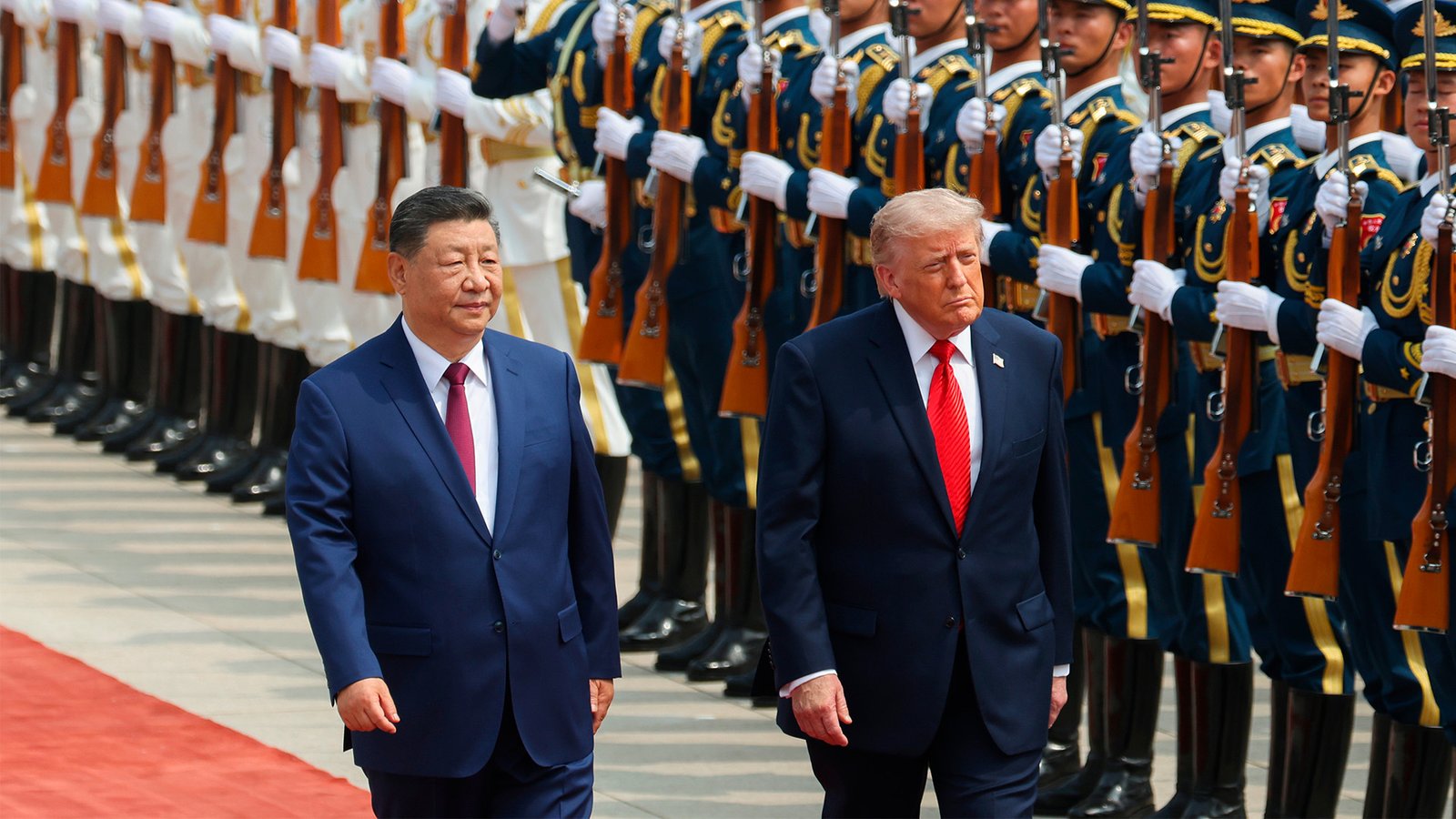
United States President Donald J. Trump has arrived in Beijing for a landmark state visit to the People’s Republic of China, marking the first visit by a sitting American president to China in nearly a decade. The two-day visit, running from May 13 to 15, 2026, comes at a critical juncture in U.S.-China relations, with trade tensions, technology competition, and regional security concerns dominating the agenda.
President Trump was received at Beijing Capital International Airport by senior Chinese officials in a ceremony befitting the gravity of the occasion. He was subsequently conveyed to the Diaoyutai State Guesthouse, the traditional venue for hosting visiting heads of state, where formal talks with President Xi Jinping are being held behind closed doors. The summit represents a significant diplomatic effort to reset bilateral ties after years of strategic competition, economic friction, and mutual suspicion that have characterised the relationship in recent times.
Background: A Relationship at a Crossroads
U.S.-China relations have been fraught with challenges in recent years, from trade wars and technology restrictions to geopolitical rivalries in the Indo-Pacific region. The two nations, which together account for over 40 percent of global GDP, have struggled to find common ground on issues ranging from climate change to intellectual property protection. This visit is seen by many observers as a potential turning point, offering an opportunity for both leaders to establish a more stable and predictable framework for engagement.
Analysts note that while fundamental differences remain, both Washington and Beijing have strong incentives to avoid escalation. For the United States, managing competition with China without triggering conflict is a paramount strategic objective. For China, maintaining access to American markets, technology, and investment remains crucial for continued economic development. The personal rapport between President Trump and President Xi, first established during previous meetings, is expected to play a significant role in facilitating candid dialogue
Key Agenda Items: US-Iran War, Trade, Technology and Security
Central to the visit is the ongoing war between the US and Iran which has been going on for more than two months now, this affected business and security across the world. The US is counting on the relationship between the two counties to help resolve the conflict, since China is a strategic partner of Iran.
Also central to the discussions are ongoing trade disputes, particularly U.S. tariffs on Chinese goods and Beijing’s export controls on rare earth minerals critical to advanced manufacturing. President Trump has previously described the current tariff structure as “not sustainable,” signalling potential openness to negotiated adjustments that could benefit exporters and consumers in both countries. Agricultural products, including American soybeans and corn, are expected to feature prominently in trade talks, given their importance to rural constituencies in the United States.
Technology policy represents another major focus of the summit. Both sides are expected to address restrictions on semiconductor exports, artificial intelligence cooperation, and data governance frameworks. The outcome of these discussions could significantly impact global supply chains, innovation ecosystems, and the future trajectory of technological development worldwide. Industry leaders on both sides are watching closely, hoping for clarity that would enable long-term planning and investment.
Regional security issues also feature prominently on the agenda. Discussions are expected to cover the situation in the Korean Peninsula, stability in the South China Sea, and broader Indo-Pacific security architecture. Both nations have expressed commitment to denuclearisation of the Korean Peninsula, though approaches to achieving this goal have differed. Additionally, the U.S.-Israel actions regarding Iran have been flagged as a topic for consultation, reflecting the interconnected nature of global diplomacy and the need for coordination on complex international challenges.
Ceremonial Protocol and Symbolic Diplomacy
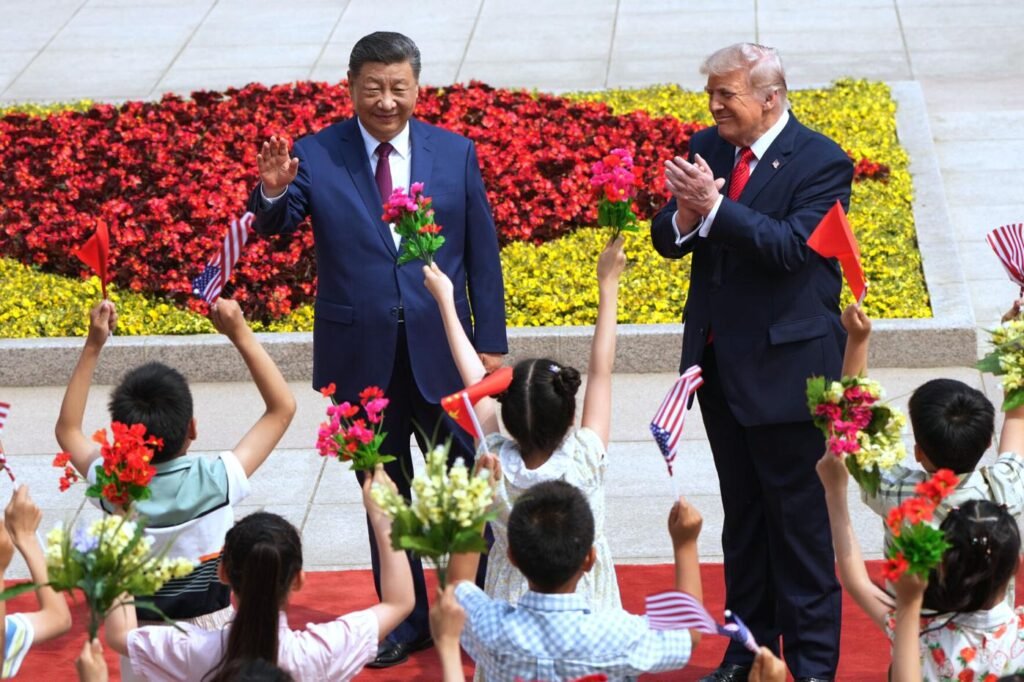
The visit includes traditional state visit protocols designed to underscore mutual respect between the two powers. A formal welcome ceremony at the Great Hall of the People, complete with military honours and national anthems, set the tone for the engagement. A state banquet hosted by President Xi will provide an opportunity for informal interaction between delegations, while cultural exchanges showcasing the rich heritage of both nations aim to foster people-to-people understanding.
These symbolic gestures, while not substantive policy instruments, serve important diplomatic functions. They create an atmosphere conducive to frank dialogue, build personal rapport between leaders and their teams, and signal to domestic and international audiences that both governments are committed to constructive engagement. In high-stakes diplomacy, such elements can prove surprisingly consequential.
Global and Domestic Reactions
International observers have welcomed the dialogue while urging concrete outcomes. The European Union, Japan, and other U.S. allies have expressed hope that the summit will produce agreements that contribute to global economic stability and security. Multilateral institutions, including the World Trade Organization and the United Nations, have emphasised the importance of rules-based cooperation between the world’s two largest economies.
Markets have responded cautiously to news of the visit. Asian equities showed modest gains on hopes of reduced trade uncertainty, though investors remain watchful for substantive policy shifts that could affect global supply chains. Currency markets have seen modest movements, with the yuan strengthening slightly against the dollar amid optimism about potential economic easing.
In Washington, bipartisan lawmakers have emphasised that any agreements must protect American economic and security interests. Congressional leaders from both parties have called for transparency in negotiations and for any commitments to be subject to appropriate legislative oversight. Civil society groups on both sides have called for transparency and commitments on climate cooperation, human rights, and people-to-people exchanges, arguing that sustainable bilateral relations require attention to broader values and global challenges.
Expert Perspectives and Analysis
Regional analysts suggest that while a comprehensive breakthrough is unlikely in two days, even incremental progress could help stabilise the world’s most consequential bilateral relationship. “The goal of this summit should not be to solve every problem between the United States and China,” noted one senior fellow at a Washington-based think tank. “Rather, it should be to establish mechanisms for managing competition, preventing miscalculation, and identifying areas where cooperation serves mutual interests.”
Experts also highlight the importance of follow-through. Past U.S.-China agreements have sometimes faltered due to implementation challenges, changing political circumstances, or shifting priorities. Ensuring that any understandings reached in Beijing translate into concrete actions will require sustained engagement at multiple levels of government and society.
Looking Ahead
President Trump is scheduled to depart Beijing on May 15, concluding a visit that could shape the trajectory of U.S.-China relations for years to come. While expectations should be tempered given the complexity of the bilateral relationship, the mere fact of sustained high-level dialogue represents progress. In an era of geopolitical uncertainty, channels of communication between major powers are invaluable assets.
For Nigeria and other developing nations, stability in U.S.-China relations matters profoundly. Both countries are major trade partners, investment sources, and development collaborators for African nations. Reduced tensions could create a more predictable global economic environment, while renewed cooperation on issues like climate finance or health security could benefit vulnerable communities worldwide.
As the world watches Beijing, the coming days may offer glimpses of whether this historic summit can transform rivalry into managed competition, and competition into selective cooperation. The stakes could hardly be higher.