






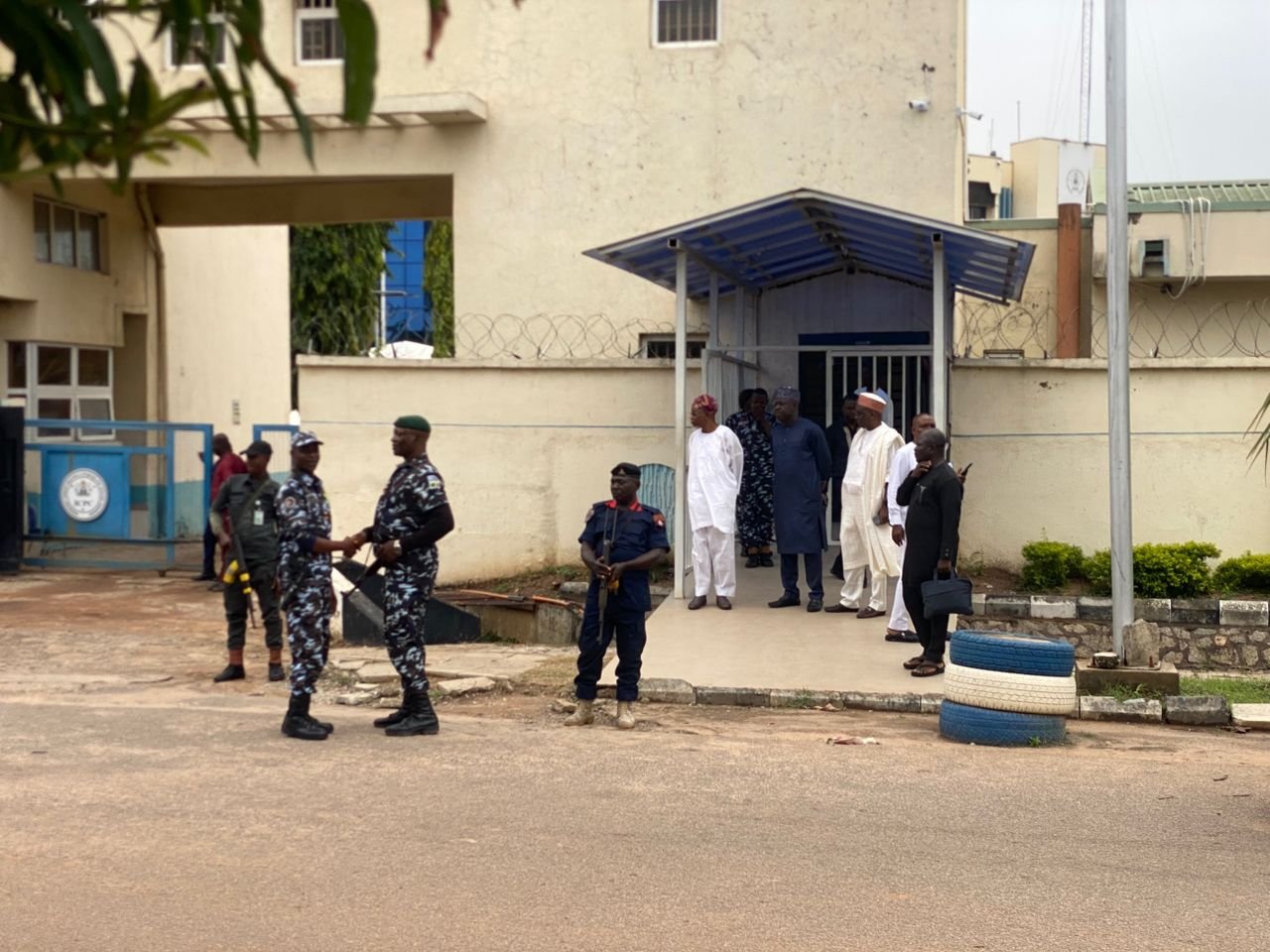
Tensions have escalated in Nigeria’s political landscape following reports that senior leaders of the African Democratic Congress (ADC) were allegedly denied access to former Kaduna State Governor, Mallam Nasir El-Rufai, at the headquarters of the Independent Corrupt Practices and Other Related Offences Commission (ICPC) in Abuja.
The Incident: ADC Leaders Turned Away
According to the alleged report, three top ADC officials attempted to visit El-Rufai at the ICPC facility but were reportedly denied entry by security operatives. The officials named include:
- Ogbeni Rauf Aregbesola, ADC National Secretary and former Governor of Osun State
- Mallam Bolaji Abdullahi, ADC National Publicity Secretary and former Minister of Youth Development
- Mallam Salihu Lukman, Secretary of the ADC Manifesto and Policy Committee and former Minister of State for Petroleum Resources
The trio, all prominent figures in Nigerian politics, had reportedly arrived at the ICPC headquarters to check on El-Rufai’s welfare amid growing concerns about his health and detention conditions.
ADC Raises Alarm: “Political Persecution”
The African Democratic Congress has since issued a strongly worded statement expressing deep concern over what it described as the “deteriorating health condition” of El-Rufai and alleged restrictions on his access to medical care, food, and family visits.
In a statement signed by National Publicity Secretary Bolaji Abdullahi, the opposition party accused the Federal Government of deploying state institutions to silence opposition figures, describing El-Rufai as a “political prisoner.”
The party stated: “The African Democratic Congress is deeply concerned about the continued detention of Mallam Nasir Ahmad El-Rufai and his deteriorating health condition, following reports from his family alleging denial of medical access, restriction of food delivery, and disregard for a court order granting him access to his doctors.”
ADC further warned that President Bola Tinubu, the ICPC, the Economic and Financial Crimes Commission (EFCC), and other security agencies would be held responsible should any harm come to the former governor.
ICPC Responds: “Claims Are False and Misleading”
The ICPC has swiftly rejected the allegations, describing them as “false and misleading.” In a statement issued by Deputy Director and Head of Media, J. Okor Odey, the commission defended its custody procedures and clarified its visitor access policy.
According to Odey, the ICPC maintains a standard visitation window between 9:00 a.m. and 6:30 p.m. for all detainees and their visitors—a policy that has been in place long before the current administration.
The spokesperson disclosed that on the day of the alleged incident, El-Rufai’s wife and a housemaid were granted access on no fewer than three occasions between 10:30 a.m. and 5:30 p.m. to deliver food. These visits, he noted, were properly documented in the visitor register and available for independent verification.
Odey further clarified that the woman featured in a viral Hausa-language video interview admitted arriving at the ICPC premises around 7:00 p.m.—30 minutes after the official closing time for visitors.
“The records are clearly documented in the visitor register and available for independent verification,” Odey stated.
On allegations of denied medical access, the ICPC spokesperson said the commission only requires proper identification and confirmation from the detainee before granting supervised access to medical personnel—a standard security procedure applicable to all cases.
He added that El-Rufai had recently been permitted to visit both his dentist and eye doctor under official escort and continues to have access to the agency’s in-house medical facilities.