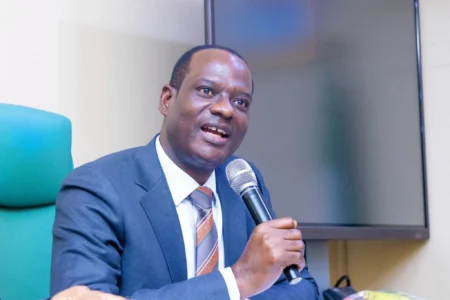





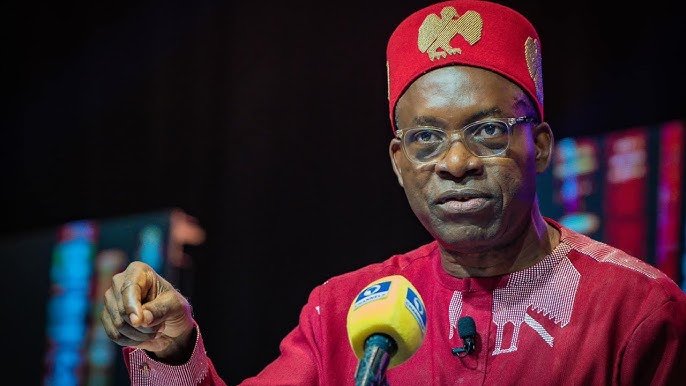
NSUKKA, ENUGU STATE — In a stirring call to intellectual activism, Anambra State Governor, Prof. Charles Chukwuma Soludo, on Tuesday, April 28, 2026, challenged Nigerian academics to abandon passive scholarship and translate their research into tangible public policy and societal transformation.
Delivering the 6th Biennial Adada Lecture Series of the Association of Nsukka Professors (ANP) at the Princess Alexandra Auditorium, University of Nigeria, Nsukka (UNN), Governor Soludo delivered a hard-hitting critique of the widening chasm between academic discourse and national development
The Central Thesis: “Intellectualism Without Activism is Sterile”
The lecture, themed “Intellectualism and the Development of a People: Mainstreaming the Igbo within the Context of Nigeria’s Federal Governance System,” struck at the heart of a paradox: Nigeria produces thousands of scholarly articles annually, yet academic insights have never had less influence on governance
“History has always been shaped by a fusion of thought and action,” Soludo declared, citing pioneers like Isaac Newton, Nnamdi Azikiwe, and Kwame Nkrumah as exemplars of thinkers who built modern society through the marriage of ideas and implementation.
The Governor observed that while Nigeria currently boasts more academics than in previous decades, the nation has entered a period of “more noise but less light” — where the critical link between intellectual innovation and government policy has been severed

The Governor observed that while Nigeria currently boasts more academics than in previous decades, the nation has entered a period of “more noise but less light” — where the critical link between intellectual innovation and government policy has been severed. The question cut to the core of the Adada Lecture Series’ purpose — to collapse the distance between scholarly reflection and practical action, transforming intellectual inquiry into frameworks for engaging governance, equity, and regional advancement
Governor Soludo advocated for what he termed “sacrificial volunteerism” — urging professors to take personal initiative in solving collective problems regardless of institutional constraints, rather than waiting for perfect conditions or external validation
On Biafra, State Creation, and the Igbo Question
Turning to the sensitive issues that define the Eastern Nigeria political landscape, the Governor addressed questions of state creation, marginalization, and the Biafra agitation with characteristic intellectual rigor.
Soludo pointed to the historical significance of the very auditorium where he spoke — noting its role in the first Biafra war — and lamented the lack of extensive academic research on such pivotal events from within Nigerian institutions as a missed opportunity for intellectual leadership
The Governor reaffirmed his conviction that “the interests of the Igbo people are best served within a united, functional Nigeria,” calling on intellectuals to lead constructive conversations on federal equity, restructuring, and balanced development rather than leaving these discussions to partisan agitators,
The Call for “Developmental Intellectualism”
Central to Soludo’s address was the concept of “developmental intellectualism” — a model where universities and scholars serve as incubators of ideas that evolve into policies, institutions, and movements that reshape nations
“Nations are not developed by natural resources alone but by the ideas that precede the building of institutions,” he emphasized, reminding the audience that intellectual capital, not crude oil or mineral wealth, determines the destiny of societies. The Governor revealed that his administration in Anambra State has spent the last four years laying foundations for sustainable development by embedding this brand of intellectual responsibility into the heart of governance — a practical demonstration of the principles he espoused
A Stern Warning: “The Cost of Intellectual Silence is Too Expensive”
Soludo concluded with a sobering warning against intellectual indifference, challenging the Association of Nsukka Professors to ensure their work moves “from the pages of journals into the halls of policy-making” to drive Africa’s renaissance “The cost of intellectual silence is too expensive for the continent to bear,” he declared, urging scholars to become multi-taskers who combine rigorous research with personal responsibility for societal outcomes
The Adada Lecture Legacy
The 6th Edition of the Adada Lecture Series builds upon a distinguished lineage of intellectually grounded public engagement. Previous speakers include:
- 2011: Most Rev. (Prof) Godfrey Onah (now Bishop of Nsukka Diocese) — on moral foundations of leadership
- Subsequent editions: Prof Athanasius Attah, Sen. Ike Ekweremadu, Gov. Peter Obi, and Gov. Lawrence Ugwuanyi — each expanding the conversation on governance, constitutional analysis, and development
The Association of Nsukka Professors (ANP), a coalition of over 200 professors from the Nsukka cultural zone drawn from universities across Nigeria and the diaspora, convened the lecture as a deliberate intervention in ongoing conversations about federal equity and regional advancement
The event attracted a roll call of Nigeria’s political and intellectual elite:
- Special Guest of Honour: Gov. Dr. Peter Ndubuisi Mbah of Enugu State
- Keynote Speaker: Sen. Chukwuka Utazi
- Special Guest: Sen. Orji Uzor Kalu
- Chairman: Vice Admiral Emmanuel I. Ogalla
- Host: Prof. Simon U. Ortuanya (Vice Chancellor, UNN)
- Royal Father of the Day: HRM Samuel Asadu, Igwe Ogadagidi of Edem-Ani Ancient Kingdom
- ANP President: Prof. Paulinus Ugwuoke
The Road Ahead
As scholars, leaders, and citizens departed the Princess Alexandra Auditorium, the question lingering in the Enugu North air was not whether Soludo’s challenge was valid, but whether Nigeria’s academic establishment possesses the courage to answer it.
As Governor Soludo reminded them: “Ideas rule the world. But only when intellectuals refuse to stand akimbo.”
For the people of the Nsukka cultural zone — the only colonial-era province that has not evolved into a state within Nigeria’s contemporary federal structure — the Adada Lecture Series represents more than intellectual theater. It is a reaffirmation that the development of a people begins with the courage to think deeply about their future, and the determination to transform those thoughts into institutions, policies, and movements that reshape destiny.