





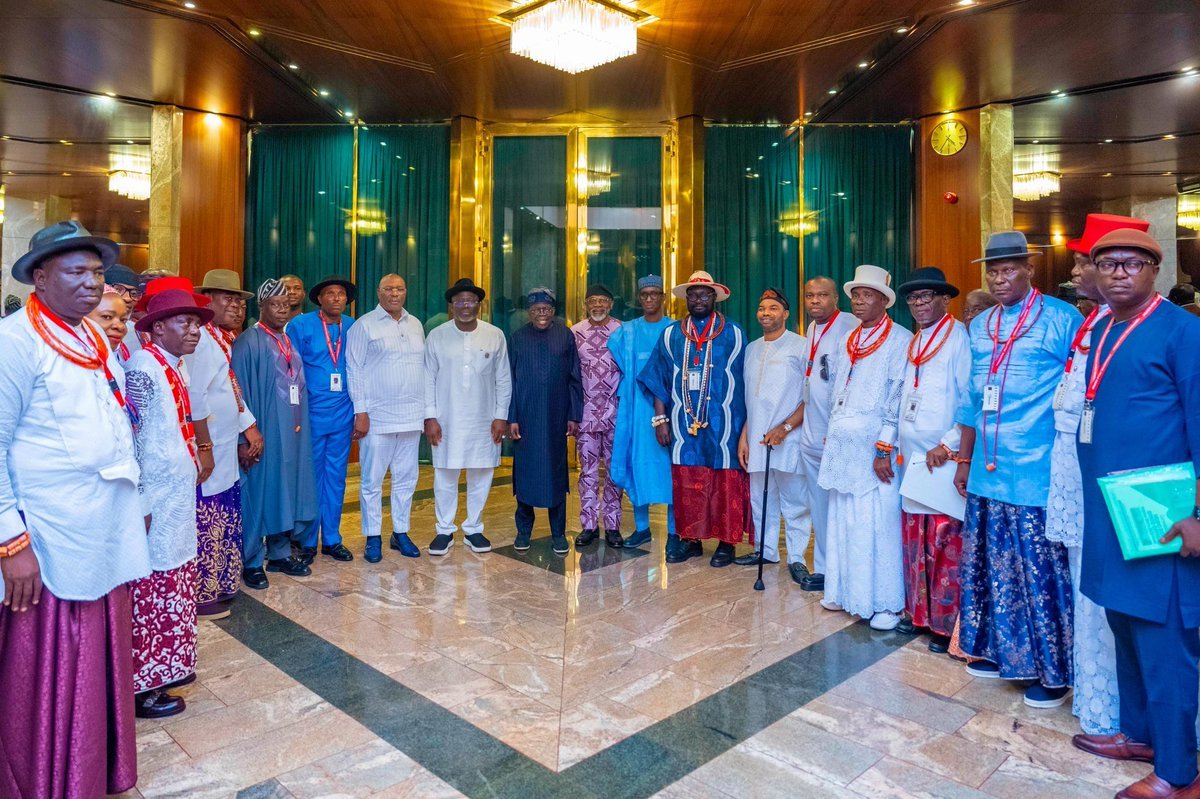
Ijaw and Itsekiri leaders have reached an agreement on power-sharing for the proposed Warri Federal Constituency II in Delta State, following President Bola Tinubu’s direct intervention in the dispute over INEC’s ward delineation exercise.
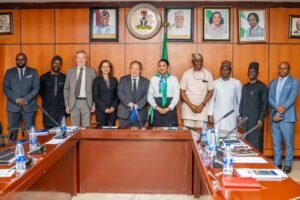
The deal was finalised on Friday during a high-level meeting chaired by National Security Adviser Nuhu Ribadu in Abuja.
Terms of the Agreement
Under the arrangement, the House of Representatives seat in the new Warri Federal Constituency II will rotate between the two ethnic nationalities. The Ijaw will take the seat for the first two consecutive terms. After that, it will move to the Itsekiri for the next two terms.
The agreement was reached after consultations involving representatives of both groups. It was witnessed by senior government officials, including the Director-General of the Department of State Services, Oluwatosin Adeola Ajayi.
Signatories on the Ijaw side included former Delta State Deputy Governor Kingsley Otuaro and Dr. Eric Omare. The Itsekiri delegation was led by Sir A.S. Mene and Chief Robinson Ariyo. NSA Ribadu endorsed the deal on behalf of the Federal Government, while Olorogun Victor Okumagba and Chief Westham Adehor signed as witnesses.
How Tinubu’s Intervention Worked
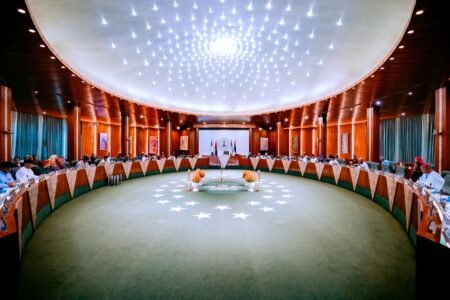
The breakthrough followed a meeting President Tinubu held with Delta stakeholders at the Presidential Villa on Thursday, June 11. During that meeting, the President directed that two representatives from each of the three major ethnic groups in the area—Ijaw, Itsekiri, and Urhobo—meet under Ribadu’s supervision to work out a mutually acceptable political solution.
The agreement is seen as a major step towards resolving long-standing tensions over political representation in the Warri area, which have often flared up during election periods.
Background to the Dispute
The disagreement arose from INEC’s ongoing ward delineation exercise in Delta State. The Ijaw and Itsekiri had raised concerns over how the new Warri Federal Constituency II was being carved out, fearing it could affect their political influence in the region.
With the 2027 general elections approaching, stakeholders feared the issue could escalate into another round of political and communal tension if not addressed quickly.
The intervention by President Tinubu and the NSA is being widely praised as a practical approach to conflict resolution. Many believe it prevented what could have become another flashpoint in the Niger Delta.
The agreement is expected to bring stability to the area and allow both ethnic groups to focus on development rather than political battles. It also reinforces Tinubu’s reputation for stepping in to settle sensitive ethnic and political disputes before they spiral out of control.