




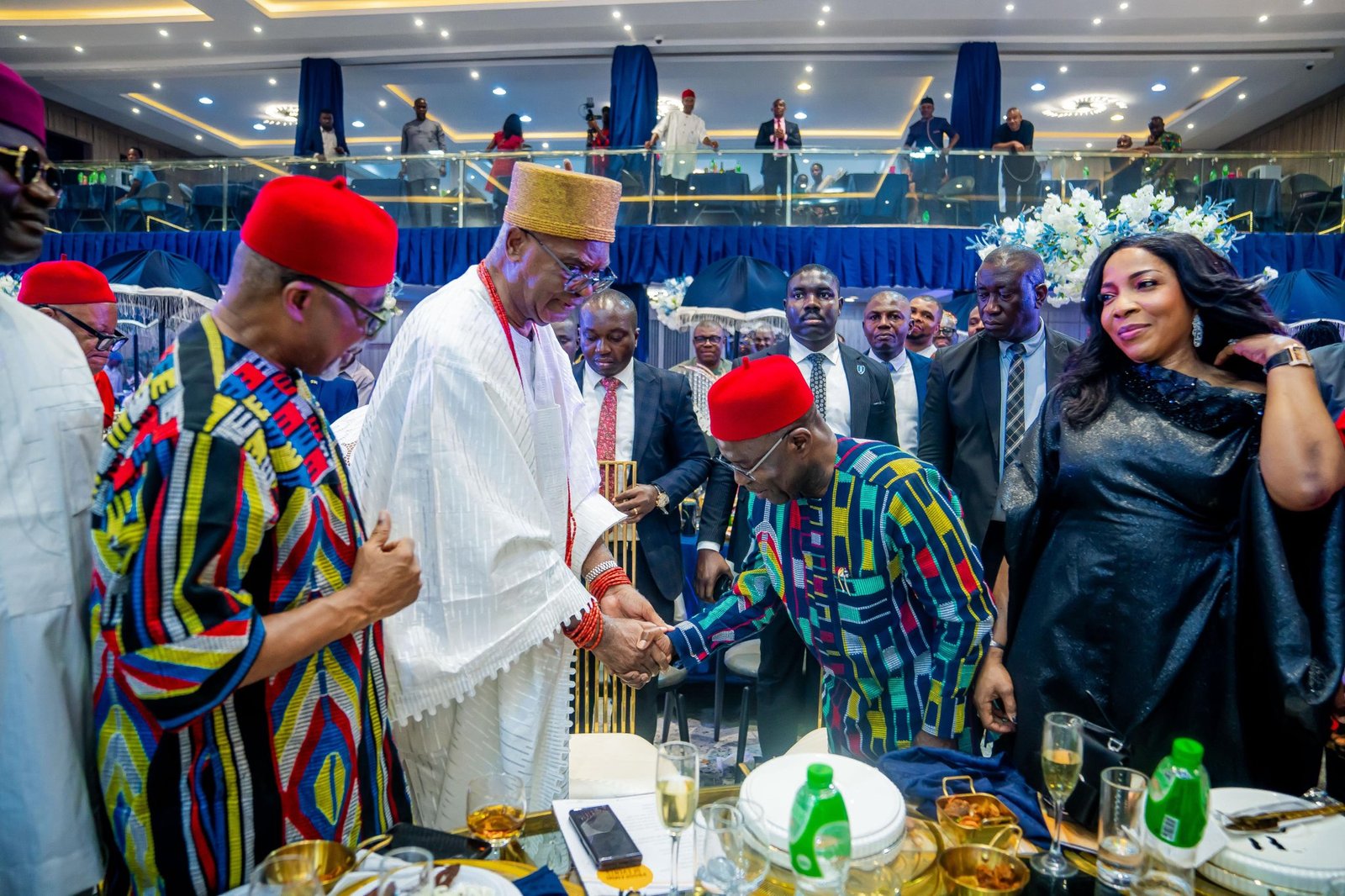
In a display that transcended state boundaries and ignited social media discourse, Governor Alex Otti of Abia State hosted a grand celebration for His Royal Majesty, Igwe Nnaemeka Alfred Achebe, the Obi of Onitsha (Agbogidi) CFR, as the revered monarch marked his 85th birthday at the Michael Okpara Auditorium, Umuahia, on Friday, May 15, 2026.
The event, which brought together traditional rulers, clergy, captains of industry, and cultural stakeholders, was more than a birthday party—it was a cultural statement about unity, respect for tradition, and the evolving role of monarchy in contemporary Nigeria.
A Monarch of Global Stature
Igwe Achebe, who ascended the throne of his forefathers in 2002, is no ordinary traditional ruler. A graduate of Stanford University and Columbia University in the United States, he enjoyed a distinguished career in the private sector before donning the royal regalia. His 24-year reign has been marked by what observers describe as a “redefinition of royalty,” blending Igbo cultural pride with cosmopolitan sophistication.
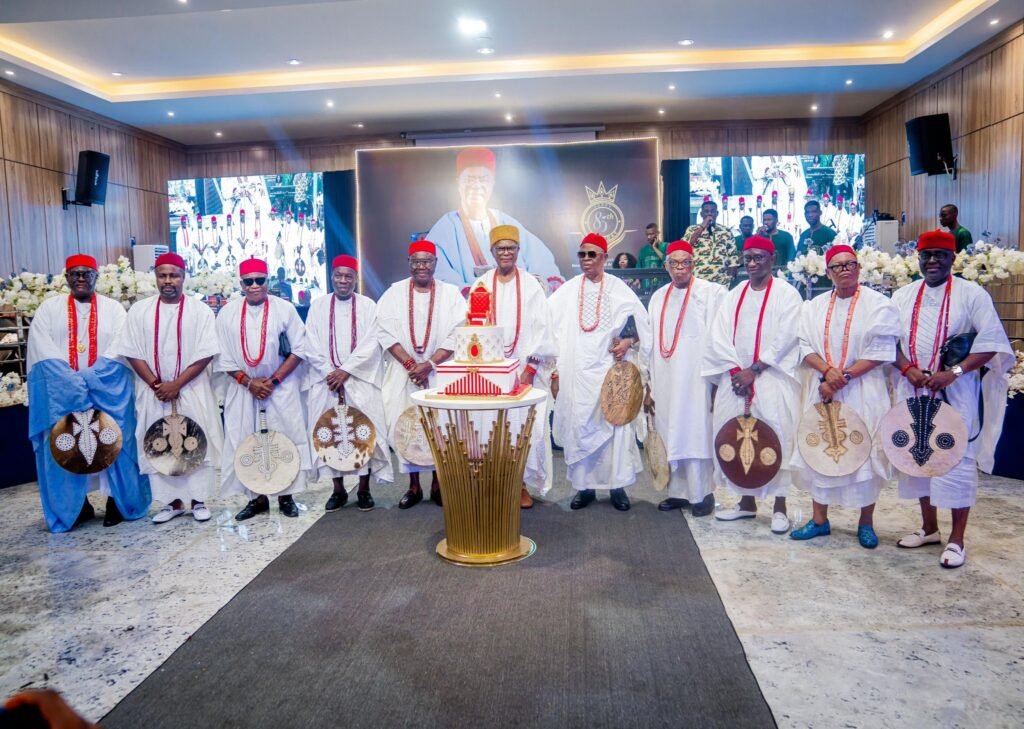
Under his leadership, the annual Ofala festival—once a local Onitsha affair—has been elevated to the global calendar of cultural festivals, drawing international attention to Igbo heritage. His commitment to education led to the establishment of a manpower development trust fund early in his reign, embodying his belief that “lack of funds should not prevent any child from acquiring a good education”.
The Umuahia Gathering: Politics, Culture, and Controversy
Governor Otti, in a post on X (formerly Twitter), described the Obi as his “adopted dad” and credited the monarch’s endorsement as pivotal to his political journey.
“Everyone needs someone they look up to in life. When I decided to run for public office, his endorsement, though not easily won, made all the difference and we are here now,” Otti wrote.
The Governor’s choice to host the celebration in Umuahia—rather than Onitsha, the monarch’s ancestral home—was deliberate. “There was no better place to celebrate him than Umuahia even though he’s from Onitsha, a reminder that we are one and the same people,” he stated, positioning the event within his administration’s narrative of a “united, dignified, inclusive, and forward-looking” Abia.
As the drums of the Ofala festival continue to echo beyond Onitsha, and as celebrations like Umuahia’s remind us of our shared heritage, one question lingers: How can Nigeria better harness the unifying power of its traditional institutions without entangling them in partisan politics?
For now, the people of Onitsha, Abia, and the wider Southeast have reason to celebrate. As one commenter aptly noted: “Atiku and Tinubu should be doing this and gaining admiration for keeping the culture alive in their domain instead of fighting to lead Nigeria”

Perhaps the true victory lies not in who hosts the celebration, but in ensuring that the values it honours—wisdom, service, cultural pride—continue to guide Nigeria’s next chapter.